Advertisement

Should Doctors and Nurses Wear Scrubs in Public? | Guest Blog

* * * * * 1 vote

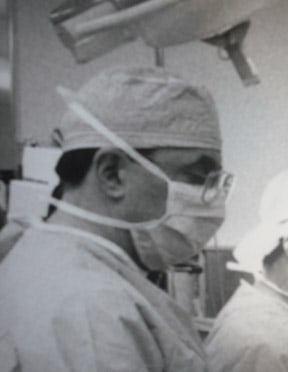
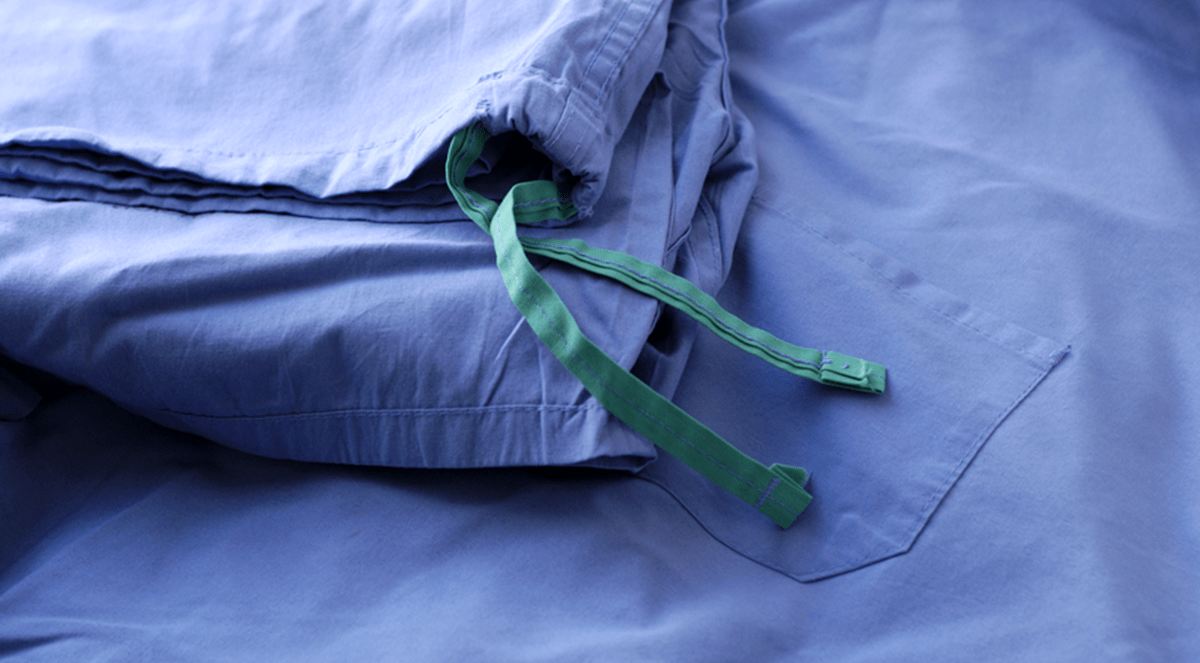
Being “old school,” I don’t like to see people wearing scrubs outside of the hospital. But there is no evidence that bacteria on scrubs spread disease, and a large number of ancillary hospital personnel wear scrubs.

Every few months when things are slow, someone publishes an article about the imaginary dangers associated with doctors wearing scrubs in public. A recent version is from The Atlantic. An associate editor saw some people in scrubs having lunch in a restaurant and was, of course, horrified. She questioned the magazine’s medical editor, Dr. James Hamblin, whose response was remarkably reasoned (until the end).

He pointed out that it might not have been doctors because everyone, including secretaries (and even custodial people in my hospital), now wears scrubs to work. Dr. Hamblin rightly added that there is a lot of debate about the issue. He speculated that some guys wear scrubs in public as a signal to women that they are doctors.

But at the end of the piece, he said it was OK if his colleague were to “tell off” the people she saw eating lunch in scrubs.

Since I’ve been married for 38 years, I don’t need to wear scrubs in public to attract women. Anyway, they tend to flock to me even when I’m dressed in civilian clothing.

Being “old school,” I don’t like to see people wearing scrubs outside the hospital. I just think it sends the wrong message — and what’s worse, it continues to provoke folks into writing letters, blogs, and newspaper and magazine columns full of indignation.

However, I can’t get worked up about this, and here’s why: Yes, bacteria can be found on scrubs. But one has to wear something to work, and whatever one wears can occasionally become contaminated. After all, it is a hospital. There is no evidence that bacteria on scrubs spread disease. Nor is there evidence that bacteria on other objects such as ties, white coats, cell phones, stethoscopes, computer keyboards, or numerous other articles shown to be contaminated has made people sick.

In addition to the large number of ancillary hospital personnel who wear scrubs, here are some others: my dentist and his staff, including his secretary and his hygienists, and my dog’s veterinarian, his secretaries and the guy who holds my terrified dog.

I don’t see a simple solution to this problem. Scrubs are sold in stores. Anyone can buy them. They come in all colors. A nurse at my hospital wears a set of desert camouflage scrubs with a matching backpack. I don’t know how to tell him that the desert camo doesn’t work. It’s easy to spot him as he stands out rather clearly amid the solid colors of the unit’s walls and the white sheets on the beds. He would blend in better if he could find a set of “hospital beige” colored scrubs.

I would also suggest that telling people off is 1) rude and 2) possibly hazardous to your health. You never know what that person you’re telling off might do when confronted.

What do you think about wearing scrubs outside the hospital?

Skeptical Scalpel is a practicing surgeon and was a surgical department chairman and residency program director for many years. He is board-certified in general surgery and a surgical sub-specialty and has re-certified in both several times. For the last two years, he has been blogging at SkepticalScalpel.blogspot.com and tweeting as @SkepticScalpel. His blog has had more than 300,000 page views, and he has over 3,700 followers on Twitter.

  • Lisa says:

    It can definitely be a health hazard for those working in hospitals and with direct contact with patients who can spread their germs.
    There was a story written about doctors neckties spreading germs too and NY is trying to put a law together against it. See more here http://news.consumerreports.org/health/2011/05/new-york-senators-to-doctors-lose-germ-infested-neckties.html

  • Harold Jones says:

    I’m like your vet and woe be unto the nosey bitch that interrupted my lunch. I’m usually civil until someone wastes my time and I would’ve blistered the ears right off her head.
    Mark me down in the *non issue* column.

  • SkepticalScalpel says:

    Lisa, I know that neckties may harbor bacteria. I mentioned that in the post. There is no evidence that bacteria on a single necktie has caused any harm to a patient or doctor. I wish that lawmakers would stop interfering in medicine.

    Harold, I agree this is really a non-issue.

  • Daniel Para says:

    I will wear scrubs in public. I am a general surgeon. I hate ties.
    I have never had a negative response in public. I also enjoy being left alone while eating (or drinking). Woe to all who disturb my “free time” and privacy. Peace out.

  • Lindsay says:

    Why does wearing the scrubs I wore to work out to a reataurant spread more germs than the dress I wore to work? Both came in contact with patients, as well as hospital chairs and other fomites. And both were covered by a white coat or a sterile town when needed. There can be no difference in the spreading of bacteria only in the others who notice.

    • Chiara says:

      The problem might be just the opposite: germs may be spread IN the hospital. Animals are not allowed in hospitals, mostly in those (like mine) hosting many immunocompromised patients. If I set in a public park on a bench where a dog sat before, or my coat touch the clothes of a workman cleaning streets, I coud gring bacterial into the hospital.

  • SkepticalScalpel says:

    Karl, I strongly agree.

    Daniel, I hate ties too. I now use the “bacteria” excuse to explain why I don’t wear one even though I don’t really think the bacteria are a threat to anyone.

    Lindsay, You have expressed my argument in a clearer way than I did. You have to wear something to work unless the lawmakers pass enact legislation saying we must all be naked.

  • Dave Schwabacher says:

    I am a perioperative nurse. As Skeptic can attest, all OR personnel wear scrubs. Many (most?) institutions own and provide the scrubs that the OR personnel wear. Taking the scrubs outside of the hospital is “theft by attrition.” That would be my only argument against it. And many states/institutions sill require the use of a cover gown over the scrubs if one will be returning to the OR in those scrubs. Even though there is no evidence to suggest a cover gown is necessary.

  • SkepticalScalpel says:

    Dave, you are correct. Most hospitals provide scrubs and launder them. But as I mentioned, scrubs are sold in stores and on line. Anyone can buy them. Those people having lunch in scrubs may not be MDs or RNs.

  • Maranon says:

    The whole reason of wearing scrubs at work ( at the ER) was because we were constantly sprayed or spotted with something during codes and other events, and needed to look clean & avoid ruining the street clothes. The idea was to wear hospital provided scrubbes ( like the OR) then shower and get into civilian clothes before hitting the street and the “liver rounds” down M street.
    I prefer to leave work and dirty clothes behind, but I guess you can wear them, Lets ask the MPH!

  • SkepticalScalpel says:

    Maranon, I appreciate the comment but no one is saying that people should wear soiled clothes of any kind in or out of the hospital. Are you saying that you are “sprayed or spotted with something” every single day? If so, you should probably change immediately after each incident and not wait until your shift is over.

    And you and everyone else who works there gets so messy that you have to shower and change clothes after work every day? That’s some busy ER you work in.

  • dee says:

    Wasn’t it just a few years ago within 6 that many institutions had OR staff washing laundry at home to have the hospital money. AORN had a complete set of instructions for it. I don’t remember any community ramifications of death or vermin, but it sounds more like everything old is new again and now the new… no scrubs in public.

    • SkepticalScalpel says:

      Washing scrubs at home gets into another issue which is that home laundering may not remove all pathogens. While this may be true, again it has not caused an outbreak of infections.

  • Michael says:

    I don’t feel that this is an issue of hygiene, but rather an issue of professionalism.
    It conveys the attitude of “Hey, look at me, I’m a doctor!”
    Unfortunately there has been an escalation in unprofessional behavior in the medical profession. Witness the increasing prevalence of tattoos and piercings.
    We have only ourselves to blame for the debasing of the medical profession.

  • Wearing scrubs in public is not stylish but wearing it does not cause any harm and hence leads to positive ,healthy and hygienic direction.
    Physicians in Dallas Texas

  • Allen says:

    I say wear scrubs all the time. Make them the official uniform of the state. Wear them to bed, to Walmart, in the bathtub. Anyone caught not wearing scrubs shall be shot on sight.

  • Tracie says:

    I think scrubs are tacky. They make you look fat and lazy.

  • Skeptical Scalpel says:

    I happen to look fabulous in scrubs, but I still don’t wear them in public.

  • Cynical one says:

    I am a Nurse in ICU. what is the difference between all the other people who come in contact with pts who wear street clothes? Doctors, secretaries, maintenance etc., What about the guys who do the laundry permeated with feces, urine, and other bodily fluids?. If you really want to be disgusted, go to the laundry room of a hospital. At least infection control is prevalent where I work. I wash my hands at least 40-50 times/ shift and I am exremely vigilant in protecting myself and pts. You should be more worried about the genetically engineered foods you ingest daily and the carcinogenic chemicals you consume than what someone is wearing on the street. Get a life

  • Skeptical Scalpel says:

    Cynical one, well said.

  • Pingback: You Wear Your Scrubs WHERE?! The Do’s And Dont’s of Wearing Scrubs | Scrubbed In: The Nurse.com Store Blog

  • Kate says:

    Skeptical scapel. You are not funny.

  • Jennie says:

    A firm no on the scrubs in public.
    Patients have no idea, nor do we, if those scrubs are going back to the OR that day.
    It’s stupid and new medical student/ doctor to wear them outside. If it is OR staff, their manager needs to get on it.

  • Doc says:

    “There is no evidence that bacteria on scrubs spread disease. Nor is there evidence that bacteria on other objects such as ties, white coats, cell phones, stethoscopes, computer keyboards, or numerous other articles shown to be contaminated has made people sick.” So bacteria on an inanimate object posses no problem? The only thing you left out was person to person contact so essentially you just eliminated 96 to 98% of the ways bacteria can be transmitted? This is ludicrous!! Most of our patients already have a compromised immune system! As a health care provider it is your duty to conceder all modes of transmission and try to eliminate them in an attempt to protect your patients. “ Joseph Lister, 1st Baron Lister, Bt., OM, FRS, PC (5 April 1827 – 10 February 1912), known as Sir Joseph Lister, Bt., between 1883 and 1897, was a British surgeon and a pioneer of antiseptic surgery. By applying Louis Pasteur’s advances in microbiology, he promoted the idea of sterile surgery while working at the Glasgow Royal Infirmary. Lister successfully introduced carbolic acid (now known as phenol) to sterilise surgical instruments and to clean wounds, which led to a reduction in post-operative infections and made surgery safer for patients.” You can thank Wikipedia for the history lesson. You should also take a look at the contributions of Florence Nightingale.

  • SkepticalScalpel says:

    Doc, thanks so much for the history lesson from such an authoritative source as Wikipedia. I’m not sure what Lister and Nightingale have to do with wearing scrubs in public. I believe back in the day, nurses wore starched white uniforms and they wore them back and forth to work.
    ***
    I have bad news for you. Bacteria are everywhere. They are on on women’s purses, toilet seats, gas pump handles, supermarket shopping carts and more. I tell you they are everywhere–even in the air we breathe! I’m not sure the human race will last through the summer.
    ***
    As I said in the post, “one has to wear something to work, and whatever one wears can occasionally become contaminated.” How do you suggest we deal with that?

  • Please leave a comment

    Your email address will not be published. Required fields are marked *


    Physician's Weekly for Current Medical News, Events & Issues